
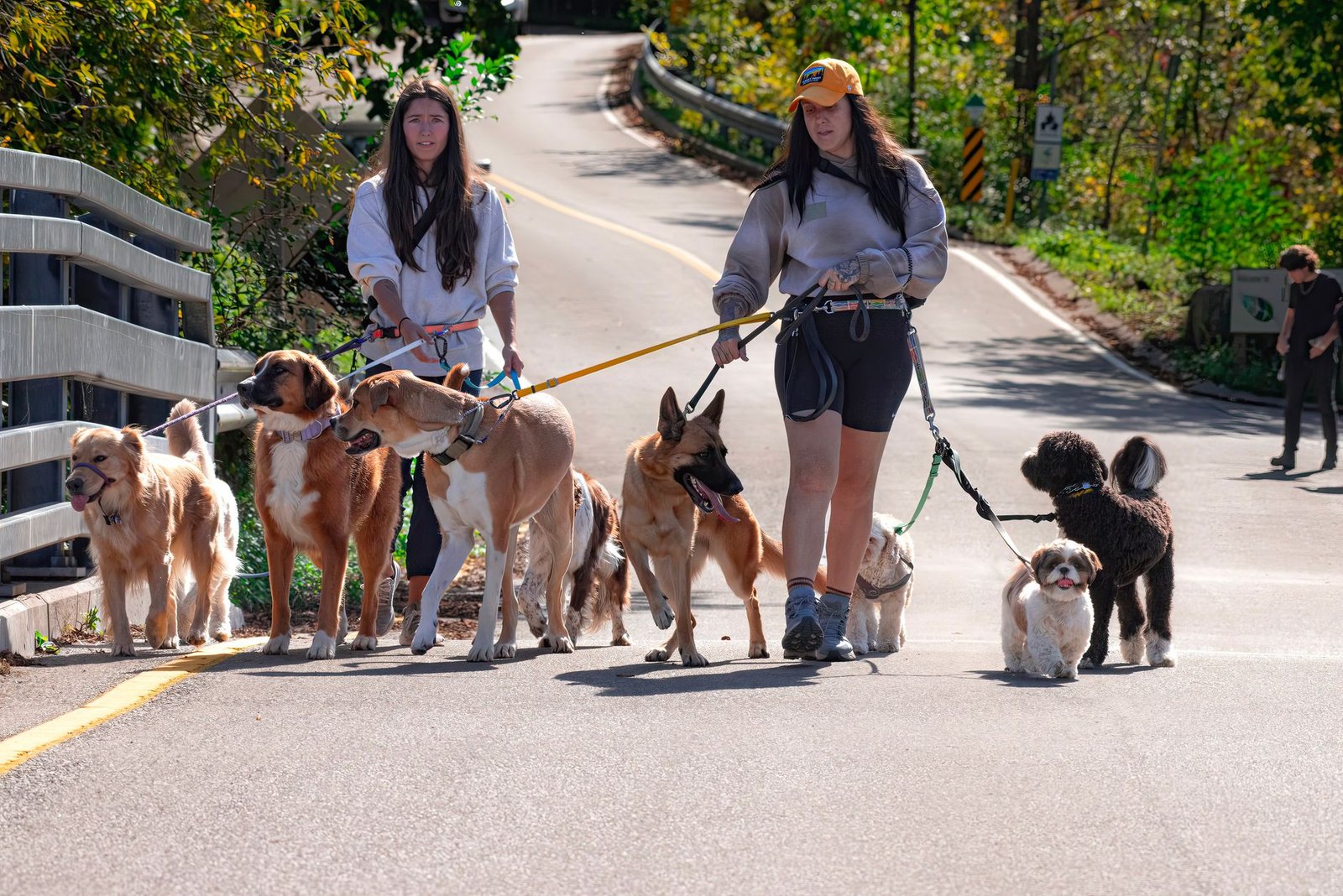
Autumn is the stretch of the year when coat care is genuinely urgent. The summer coat is shedding out, the winter undercoat is coming in, and within a few weeks all of it will be wet most days. A coat that goes into November tangled will spend the whole season damp underneath, and that is where the problems start.
Why the timing is tight
Most dogs and cats go through a coat change in late summer and autumn. Dead summer hair lifts out and a denser undercoat grows in beneath it. If that loose hair is not brushed out, it stays trapped in the new coat and becomes the raw material for mats.
Then Kitsilano’s weather arrives. Wet hair swells and then tightens as it dries, so a loose tangle on a Tuesday is a firm mat by Friday. Add a harness rubbing, a beach visit, and a few days where nobody had time to brush, and a manageable coat becomes a job for clippers.
What a mat actually does
Mats are not just untidy. A tight mat pulls constantly on the skin, which is painful in a way that is easy to underestimate. Moisture stays trapped underneath it, and that is the ideal setup for irritation and infection. It hides what is underneath, so sores, ticks, lumps and fleas go unnoticed. And a large mat restricts how a dog moves, particularly around the legs and armpits.
The places to check weekly, because these are where mats form first:
- Behind and under the ears
- The armpits and the groin
- Under the collar and where the harness straps sit
- The tail base and the back end, especially on long-coated cats
- Between the toes and around the pads
- The chest, on dogs who wear a harness daily
Different coats, different jobs
- Double-coated breeds such as huskies, shepherds and retrievers need the dead undercoat raked out, not the topcoat cut off. Shaving a double coat removes insulation and can change how it grows back. Regular deshedding through autumn is the whole task.
- Curly and wool coats, doodles in particular, do not shed loose hair into the house. It stays in the coat and mats. These dogs need brushing to the skin most days, not a quick pass over the top, plus a professional groom on a schedule.
- Long silky coats mat behind the ears and on the trousers. A comb, not just a brush, is what finds them.
- Short coats need little brushing but still need drying, and short-coated dogs feel the cold rain more than their owners expect.
- Long-haired cats are the ones people leave too long. A cat who cannot reach her back end, or an older cat who has stopped grooming, will mat there first, and a cat who stops grooming is worth a visit through our wellness program as well.
A workable autumn routine
- Brush to the skin, in sections, lifting the coat as you go. Surface brushing leaves the mat layer untouched and gives false confidence.
- Use a comb as the test. If a metal comb passes through from skin to tip, the area is genuinely clear.
- Little and often beats a weekly battle. Five minutes daily keeps most coats ahead of the weather.
- Dry properly after every wet walk, particularly the chest, legs and behind the ears.
- Take the harness off indoors so the fur underneath can dry and lift.
- Keep the feet tidy. Ask your groomer to keep the fur between the pads short, and keep nails short, because slipping on wet floors starts with long nails and hairy feet.
- Book the groom before the rain settles in, not after the coat has matted. Appointments get harder to find once the wet weather starts.
Never cut a mat out with scissors. The skin tents up into the base of a mat and it is very easy to cut through it, which is one of the wounds we would rather not repair. In trained hands, clippers can work under a mat where scissors cannot.
For a pet who is already badly matted, painful to handle, or elderly and unable to tolerate a long session, our medical grooming services exist for exactly that situation, with the option of sedation where our veterinary team judges, after examining your pet, that it is the kinder route.
When a coat change is a health signal
Grooming is also how most owners find problems early. What is worth an appointment rather than a brush:
- Hair loss in patches, or thinning on both sides of the body
- A coat that has become dull, greasy, brittle or smells different
- Heavy dandruff, or scabs you can feel but not see
- Shedding that is dramatically heavier than this pet’s normal
- A cat who suddenly stops grooming, or one who over-grooms a single area bald
- Any lump you find under the coat while brushing
- Itching that continues once the coat is clean and dry
Coat quality reflects what is happening underneath, including nutrition, parasites, hormones and skin conditions, so those changes are worth raising through our veterinary medical services rather than waiting for the next groom. If itching is the main problem, our guide to itchy skin and allergies in Kitsilano works through the usual causes.
Frequently asked questions
How often should I brush my dog in the autumn?
Daily for curly and wool coats, every second day for long silky coats, two or three times a week for double coats during the shed, and weekly for short coats. What matters more than frequency is whether a comb passes to the skin afterward.
Should I shave my double-coated dog before winter?
No. The undercoat is insulation and the topcoat sheds water, and shaving removes both. Deshedding rakes out what is dead and leaves the working coat in place. The exception is a coat so matted that clipping is the only humane option, and that is a decision to make with us or your groomer.
My dog hates being brushed. Any suggestions?
Work in short sessions with food, start where they tolerate it rather than the worst area, and check your tools, since a slicker used firmly on bare skin hurts. If your dog reacts sharply to one specific spot, that is often pain rather than dislike, and it deserves an exam.
Do cats need brushing?
Short-haired cats manage largely on their own, though brushing reduces hairballs and gives you a weekly look at the skin. Long-haired cats need regular help, especially at the back end and in the armpits. Any cat whose grooming habits change is worth a check.
Is a raincoat bad for the coat?
Not if it comes off at home. A coat left on a damp dog for hours keeps the fur wet and flat against the skin, which is the opposite of what you want. Take it off, hang it to dry, and towel the dog.
How do I know if a mat needs a professional?
If you cannot slide a comb underneath it, if the skin moves when you pull it, or if your pet objects sharply to it being touched, stop and book. Trying to work through a tight mat at home causes pain and, more often than people expect, a cut.
Speak to the team at Cypress St. Animal Hospital
If your pet’s coat is matting faster than you can keep up with, or the skin underneath looks sore, phone us before the wet months set in.
Published by the team at Cypress St. Animal Hospital.
This article is for general educational purposes only and is not a substitute for an in-person veterinary examination or advice about your individual pet. If you have an urgent concern about your pet, contact Cypress St. Animal Hospital or your nearest emergency veterinary hospital right away.
Cypress St. Animal Hospital
1889 Cornwall Ave, Vancouver, BC V6J 1C6
Phone: (604) 734-2500
Email: cypresshospital@gmail.com
Hours: Everyday 9:00 AM to 8:00 PM